
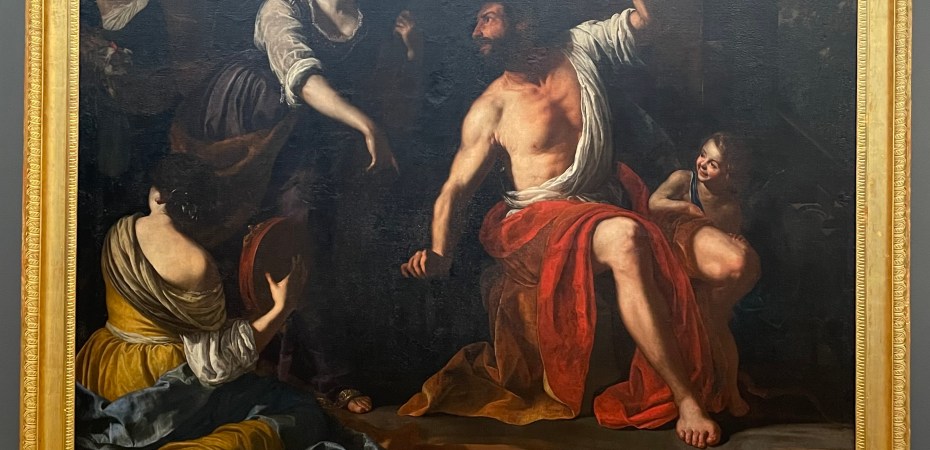
I was fortunate enough this week to visit the Getty Center in Los Angeles, CA to view the restored, approximately 395 year-old painting of Hercules and Omphale by the famed Italian painter, Artemisia Gentileschi. And what a treat it was! I had plenty of time to spend in the room that had a terrific description (video, photos and text) of the process of rescuing this classic from the damage done during an explosion in the Beirut Harbor in 2020. No, the explosion was not war related… it was poorly stored volatile chemical compounds that caused the preventable loss of many lives and the damage to the nearby Sursock Palace and about half of its collection. The Sursock Palace reopened after three years and restoration of many items is still ongoing. Meanwhile, the Getty has wonderfully documented the restoration of Hercules and Omphale by showing the teams it took to support the canvas for transport, the fragments of glass and plaster that were pulled from the painting and small flecks of paint that were removed to match colors for restoration. It’s a fascinating process. Having just completed my first oil painting in about 40 years, previously focusing on watercolor, I understand a fraction of how much varnishes and pigments have changed over centuries. The technology now available to see multiple layers of paint is a huge help to conservators.
As the wonderful signs in the Getty gallery teach us:
“Gentileschi is arguably the most celebrated female artist of seventeenth-century Italy. She consciously cast herself as an ambitious painter of narrative scenes from ancient history, classical mythology, and the Bible, the highest genres in the artistic hierarchy of the time. She was in great demand in particular for her individualized depictions of female heroes from the classical and Biblical traditions.”
Gentileschi lived and worked in Venice, Florence, Rome and Naples.
In the same gallery room as the restored painting of Hercules, the Getty Center also hung several other paintings Artemisia had done. It was a delight to see, in person, “Lucretia” painted about 1627. The pain women endure from violent men attacking young women is a common theme in Artemisia’s work, she herself was a survivor. Having this personal insight into the vulnerability of women during her time, gives her work a particular voice that was not heard from the popular male artists of the time, for obvious reasons. The fact that her works have endured for hundreds of years speaks not only to her skill in painting, yet to the acts that must be illuminated to spotlight the danger women manage in their daily lives, just to function and live.
A story more familiar to many is the story of Bathsheba and David. This painting by Artemisia was done about 1635-1637. Seeing the glowing figures of Bathsheba and her maids is in stark contrast to David viewing everything from the balcony, so dark, you almost miss him. In watercolor, you work from light to dark. However in oils you work dark to light. Artemisia’s ability to start very dark and then gradually layer paints (very thinly) to achieve the fleshy glow of the female nudes is stunning. It really makes each female look as if they exist on another realm entirely – from the lavishly dressed men in the scene whose flesh appears dull, ruddy and ordinary. The painting Suzanna and the Elders is a perfect example of this. It was also painted about 1635-37. The moralistic tone of the painting was apparently lost on the male audience of the time.
Another insightful panel in the exhibit states: “The nature and status of women were prominent themes discussed in cultural circles in seventeenth-century Italy. Prompted by such publications as Lucrezia Marinella’s, The Nobility and Excellence of Women and the Defects and Vices of Men (1600), female writers rejected misogynistic prejudices, invoking exemplary women from ancient history to argue that women possessed wisdom and a natural inclination towards virtue.” (more to read on the plaque when YOU visit).
You can view a video of the explosions and restoration online or at the Getty Center. However, I recommend that after you view it, if you are at all able, visit the painting in person. It’s quite something to stand in this era and look at a painting by such a renowned female painter from so many centuries ago. Keep learning, and keep creating my friends! Who knows where your works will end up!
Discover more from Welcome to Art & Design by KSD
Subscribe to get the latest posts sent to your email.

